I want story to sit at the heart of my diary. So when a story I poured myself into is met with “I couldn’t understand it,” it is hard not to feel disappointed.
Today, I went to Olympic Forest Park with brothers and sisters to play Frisbee. Everyone was so easygoing, and Frisbee was super fun!
I searched for a few caches along the way, only to discover that one lay precisely within a sprinkler’s firing range. After several rounds of matching wits with it (meaning: walking in circles), I received my prize—a pair of shoes completely caked in mud.
Halfway through lunch, I looked at the time and realized that the afternoon Mystery Association meeting was about to start, so I left in a hurry.
I was still ten minutes late. Anyway, here are my notes:
Puzzle Workshop: From Puzzle Friday to Setter
- How are puzzles created?
- Example puzzle: Display Box The difference between the original draft and the final version, potentially redundant information (keyboard layout at first glance), and improvements on hourly puzzles.
- Example puzzle: Counting Method The original puzzle used numbers to represent the number of strokes, and the circles also hinted at the maximum stroke count (and it looked much nicer!). Modification process: using emojis? Converting numbers to circles?
- Evolution of a Puzzle
- Example puzzle: Cutting Wallpaper
- Earliest prototype: waterdrop-shaped clues, where different textures pointed to sunflower seeds and almonds respectively.
- Concept: the same shape, where different textures bring different meanings (Dong Dong puzzles also used this concept)
- Improvement: more common shapes (sectors), and then a coincidence was discovered: road barricades are also known as ice cream cones. Potential issues and possible remixes.
- The Birth of “Blind Men Touching an Elephant”
- Source of inspiration: Logitech’s logo. Does drawing it look like a megaphone? Looking at it vertically, does it look like a lamp?
- Name changes: direction-views Mr. col’s suggestions for improvement, using the orientation of characters to imply perspective.
- Puzzle Workshop: Half-finished Puzzles Using the bounding box after selecting all to design puzzles, ensuring solvability.
I designed a puzzle too! Interested in giving it a try? Hint: it involves ancient Chinese culture.
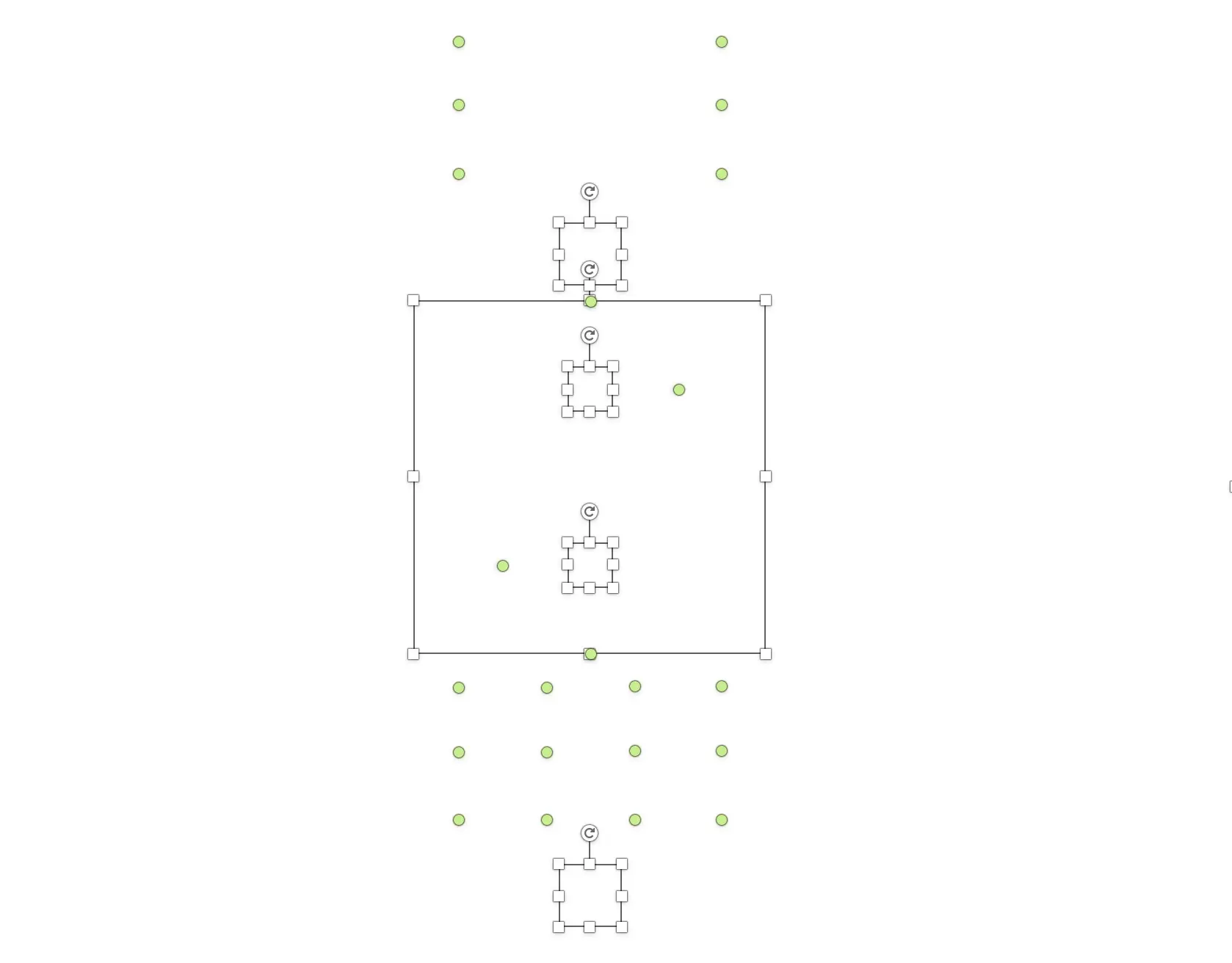
🔍 Click to view puzzle hints/answers
Hint: Observation reveals a connection to the Eight Trigrams, or *bagua*, of classical Chinese culture.

Trigrams: ☰ (Qian), ☷ (Kun)
Approach: combine the Chinese characters for the names of the trigrams. Only one meaningful expression emerges: "Qiankun" (乾坤, heaven and earth—the universe).
Comments